
Multi-Course Training Providers
Organizations where learners need help choosing between several courses, programs, or levels.
Private & Corporate Training
Guide prospective learners using approved course information and clearly defined rules.
Prospective learners often need help choosing a course, understanding the right level, checking schedules, or deciding what to do next. An AI assistant can make this first interaction more structured by guiding each inquiry toward relevant course information, initial placement, or the appropriate training team.
The scenario works with the course information and rules approved by your organization. This gives your team a controlled way to answer common questions, collect the information needed for the next step, and guide learner inquiries within a clearly defined scope.
Review one defined scenario, such as course guidance, initial placement, or learner follow-up, using your organization's course information and rules.

An answer becomes more useful when the learner also knows what should happen next.
Training providers often receive the same questions about course choice, participation requirements, suitable level, schedules, and consultation. As the number of courses, branches, or incoming inquiries grows, keeping responses consistent and directing each learner correctly becomes harder.
Information can also sit in different places. Some details may be available on the website, while other answers depend on the sales or training team. This can leave prospective learners moving between different contacts before they understand the right next step.
A training assistant can make this first interaction more structured. It can use approved information to answer common questions and guide the learner toward the relevant course, initial placement process, or responsible team.
Fit depends on more than the type of training you offer. Course complexity, inquiry volume, and information readiness also matter.
This scenario is better suited to organizations that manage several courses or learning paths and spend meaningful time answering questions, advising prospective learners, or following up with inquiries.
Reliable course information is also important. The organization needs a clear owner who can review that information and keep it current. Rules for course guidance, initial placement, and learner routing should also be defined before the assistant is expected to use them.
Organizations where learners need help choosing between several courses, programs, or levels.
Training businesses that need course information and response rules to stay consistent across different branches or teams.
Providers that need to understand an organization's initial training requirements before guiding the inquiry to the appropriate next step.
Organizations where consultation, course questions, and learner follow-up take a significant amount of training or sales-team time.
The initial scope should focus on one clear, reviewable learner journey.
The right starting point depends on your course structure, consultation process, and current follow-up model. You do not need to introduce every scenario at once. A defined use case gives the team a clearer way to review the information, rules, and routing points before broadening the scope.
Help prospective learners understand relevant course options using approved course information and defined guidance rules.
Collect the information needed for the initial placement step so the next review can continue through the process defined by the training provider.
Answer approved questions about courses, participation requirements, schedules, and the next step.
Collect the information needed to understand the inquiry and guide it toward the appropriate course or follow-up path.
Guide the learner toward the relevant training team, sales team, branch, or consultation path according to defined rules.
Define a clearer follow-up path for learner inquiries. If a broader operational workflow is later required, that scope can be reviewed separately.
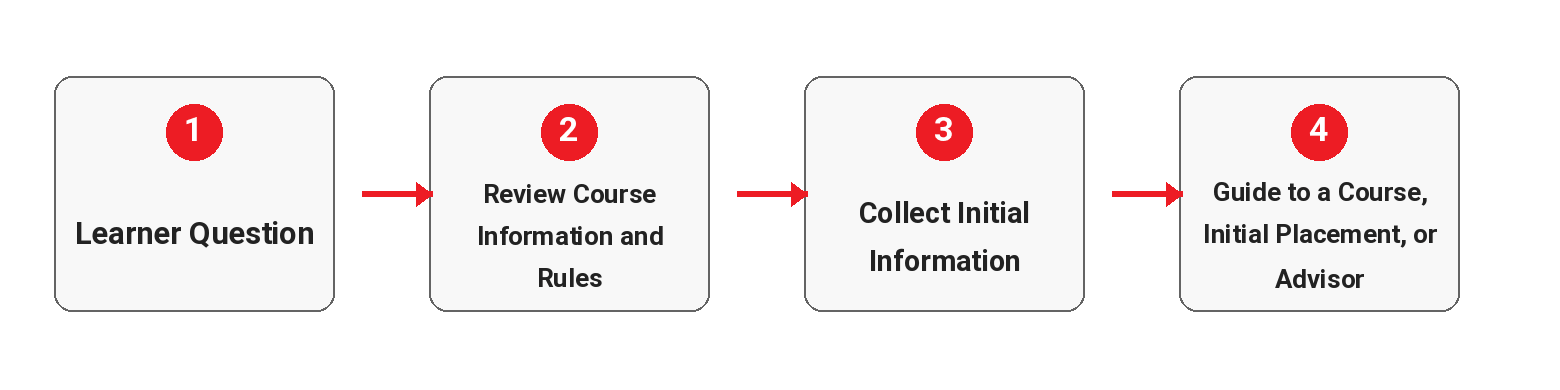
The exact path is defined around each training provider's approved information and rules.
The assistant needs trusted course information, clear boundaries, and a defined information owner.
Before the scenario is reviewed, the team should decide which course information the assistant may use, which questions it is expected to handle, and when an inquiry should move to the responsible team.
Course information that changes frequently needs a clear owner. That person or team is responsible for reviewing course details, schedules, and response rules. Without a reliable information source and an accountable owner, the risk of outdated or inconsistent guidance increases.
Initial placement should also remain within the questions and rules approved by the training provider. The assistant should not make conclusions or recommendations beyond that defined scope.
A limited first scope makes the data, rules, and learner journey easier to evaluate.
You can begin with one defined scenario, such as course guidance for a selected group of programs, a set of common course questions, or the information needed before initial placement.
The training demo can focus on the course information, response rules, and learner-routing path required for that scenario. The purpose is to understand the practical scope and identify what the organization needs before making broader commitments.
If the scenario is worth extending, the next scope is defined separately. CRM and Workflow are documented as possible expansion paths for this segment, but they are not assumed to be part of the initial training scenario. Any later use depends on the organization's actual need, the defined technical scope, the officially confirmed capability status, and a separate implementation agreement.
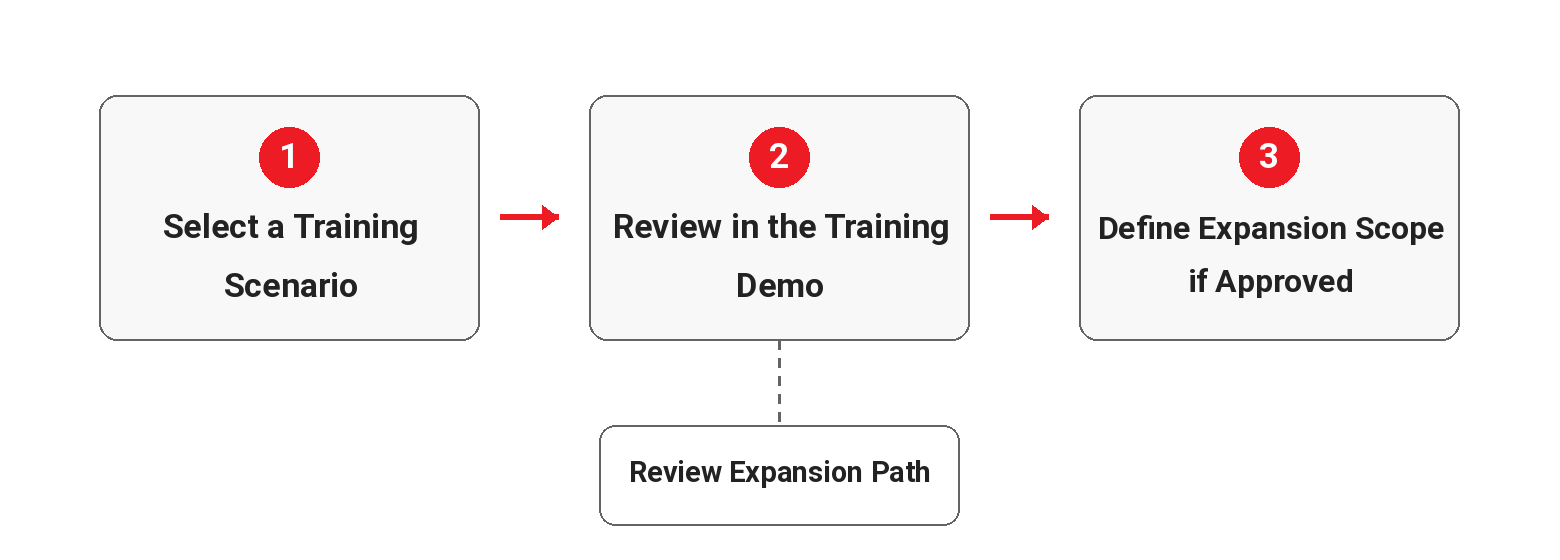
Expansion is defined only after the need and scope have been reviewed.
Message volume alone does not show whether the training scenario is working.
Before implementation, the organization should decide which part of the learner journey it wants to evaluate. The baseline and target depend on the current process and the scope selected for the scenario.
For this education segment, relevant measures include qualified learner inquiries, response time, consultation booking rate, and conversion to the defined next stage. The quality and freshness of the information used in responses should also be reviewed because the scenario depends on approved course data and clear ownership.
No fixed target applies to every training provider, and no result should be promised without real data from the organization.
This scenario is better suited to multi-course training providers, branch networks, corporate training providers, and organizations with a high volume of consultation or learner inquiries. Reliable course information and a clear owner for maintaining that information are also important.
The organization should have approved course information, participation requirements, current schedules, initial placement questions, learner-routing rules, and a defined path for passing an inquiry to the responsible team. Someone should also be responsible for reviewing and updating this information.
The assistant can collect the information required for an initial placement step using questions and rules approved by the training provider. The exact boundary of that process, including when the inquiry should move to a specialist, should be defined before implementation. The assistant should not make conclusions outside the approved rules.
No. The initial scope can focus on one course group, one consultation path, or a limited set of common questions. A smaller scope makes it easier to review the information and rules before any expansion.
No. CRM and Workflow are documented as possible expansion paths for this education segment. They are not assumed to be part of the initial scope. Any later review or implementation depends on the organization's actual need, the defined technical scope, the officially confirmed capability status, and a separate implementation agreement.
The measures should reflect the specific learner journey and current process. Relevant measures include qualified learner inquiries, response time, consultation booking rate, and conversion to the defined next stage. The quality and freshness of the information used in responses should also be reviewed. No fixed result should be promised before the organization's baseline and real data are available.